Historical estimates relating to the San Manuel project are historical in nature and are not current mineral resources or mineral reserves under NI 43-101. While Faraday Copper considers the historical estimate to be relevant to investors as they indicate the presence of copper mineralization, the mineral resource estimates referenced herein were calculated prior to the adoption of NI 43-101 and are provided as historical data only. The estimates were calculated using a copper price assumption of US$0.80/lb, which differs significantly from current market conditions and these estimates should not be relied upon for economic evaluation. A qualified person has not completed the work necessary to classify the historical estimate as current mineral resources and Faraday is not treating the historical estimate as current.

Geology
The San Manuel project is a large, well-understood Laramide porphyry copper system located in Pinal County, Arizona. The mineral property comprises the San Manuel and Kalamazoo deposits, which are parts of the same original mineralized system. San Manuel represents the historically mined portion, while Kalamazoo is the downthrown extension of the porphyry system, displaced towards the southwest along the San Manuel fault.
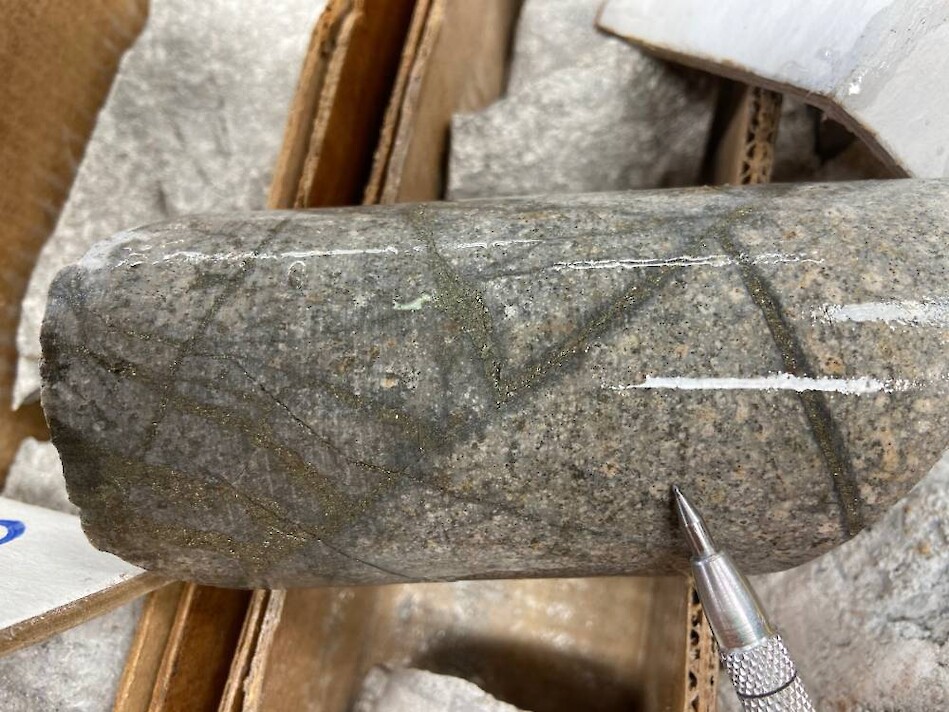
At San Manuel, copper mineralization is hosted mainly within multiphase granodiorite to monzonite porphyry intrusions and the surrounding Oracle Granite. The system displays the classic alteration pattern associated with porphyry copper deposits, including a potassic core, a copper-bearing phyllic zone, and an outer propylitic halo.
The San Manuel–Kalamazoo system is historically important as it contributed to the development of the widely used Lowell-Guilbert porphyry copper model which helps explorers worldwide to guide their porphyry exploration efforts.
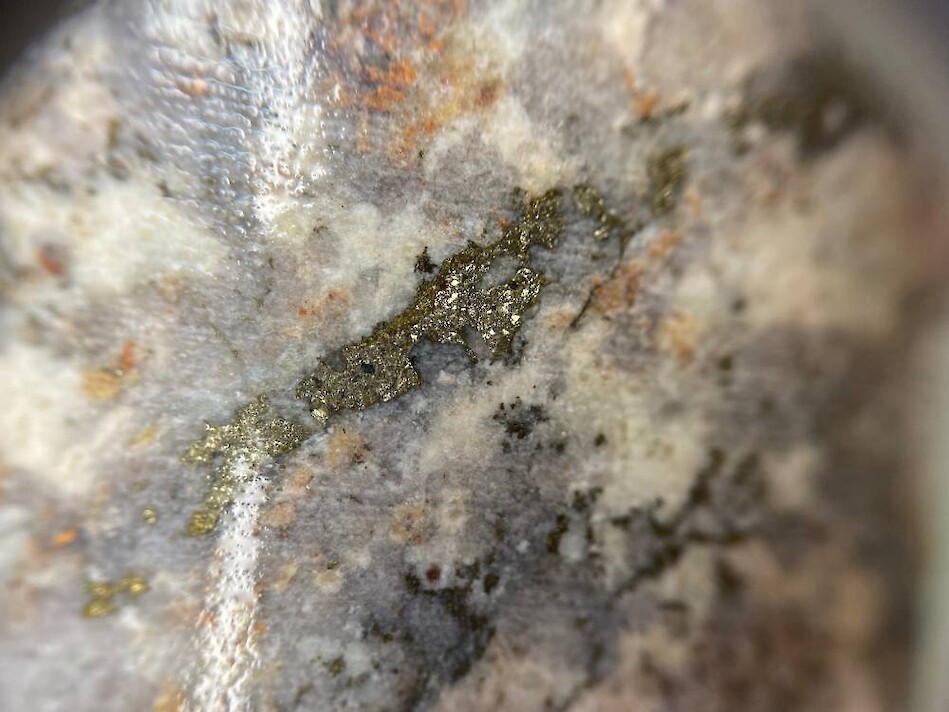
The main sulphide copper mineralization occurs as chalcopyrite with pyrite, along with subsidiary molybdenite and minor bornite. The operation also recovered molybdenum, gold, and silver as by-products.
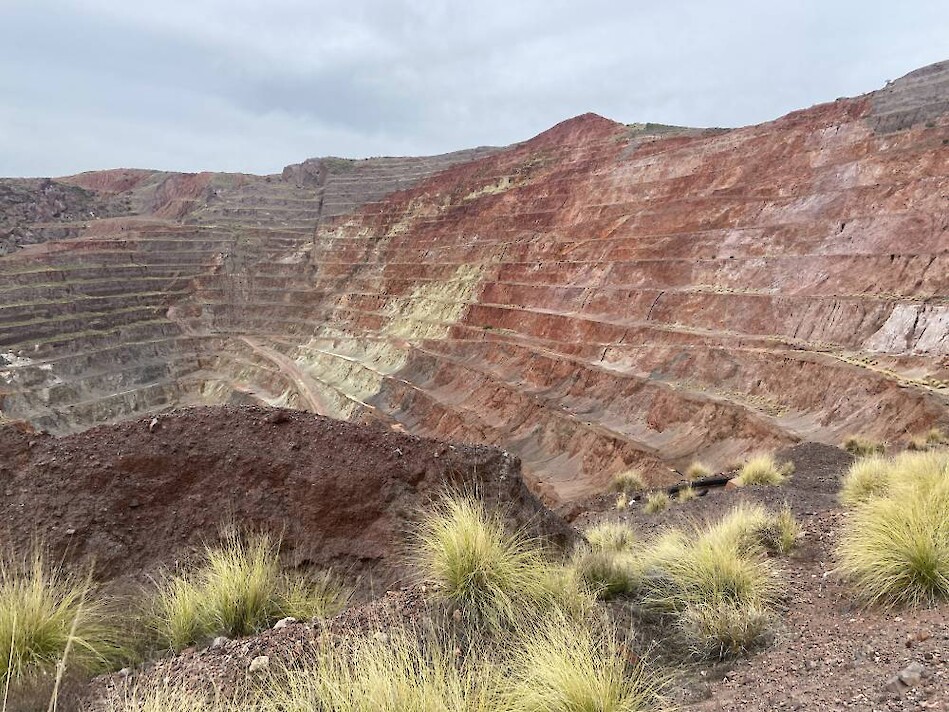
Extensional faulting and exhumation in combination with a favorable climate formed the near-surface supergene and oxide copper mineralization at San Manuel. This oxidation and enrichment formed minerals such as chrysocolla and chalcocite, which supported open pit mining, heap leaching, SX-EW processing, and in-situ recovery during the later years of the mine’s operating life. In contrast, copper mineralization at Kalamazoo consists of chalcopyrite and bornite, and remained protected from weathering and oxidation beneath cover rocks.
The scale and continuity of the system are significant. The San Manuel deposit extends for more than 1,800 metres down dip and 900 metres along strike from surface, while the Kalamazoo deposit begins at greater depth and extends over 1,200 metres downdip and over 750 metres along strike.
The San Manuel project supported one of the largest underground copper mining operations in the United States, producing more than 4.2 million tonnes (4.65 million short tons) of copper between 1955 and 1999, with the majority coming from the San Manuel deposit, while Kalamazoo remains largely intact.
Although San Manuel has a long history of production, the property has had limited modern exploration. Historical drilling, production records, geological models, metallurgical information, and mine operating data provide a substantial technical foundation. This creates an opportunity to better evaluate the potential of the San Manuel and Kalamazoo system in the context of the Redhawk Copper Complex.